
A tourism village succeeds when the visit makes sense for the people who live there. Attractive streets and scenery can generate interest, but they do not by themselves explain who benefits, what remains in use or how everyday life survives the attention. Three places offer useful questions for travellers: Birgi in Türkiye, Shirakawa-go in Japan and Bohinj in Slovenia.
They are different kinds of destinations, and their designations should not be confused. UN Tourism recognised Birgi through its Best Tourism Villages initiative in 2022. Shirakawa-go forms part of an inscribed UNESCO World Heritage property. Bohinj’s local producer identity provides another kind of connection between visitors and a place. None of these labels alone tells the whole story.
Birgi: ask how heritage supports livelihoods
UN Tourism’s account of Birgi, in the Ödemiş area of İzmir, draws attention to craft and community activity, including a women’s cooperative. Such details suggest a useful way to visit: find out what is made locally and how a purchase reaches the producer. Birgi’s place on Türkiye’s UNESCO Tentative List should not be presented as full World Heritage inscription.
For a traveller, the question is less whether a village looks unchanged than whether skills and buildings remain useful. A workshop, a small business or a local guide can help explain that relationship, where visits are offered on agreed terms.
Shirakawa-go: a house is more than a silhouette
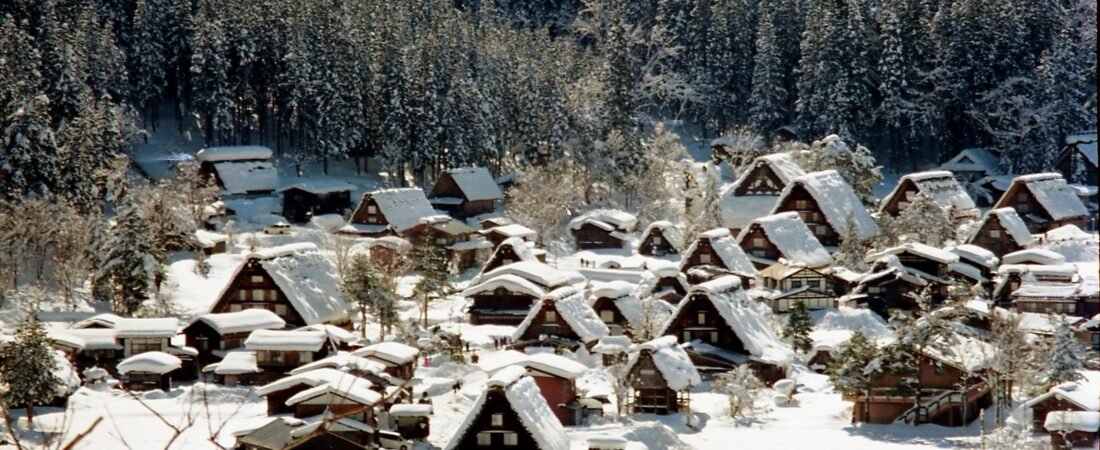
UNESCO describes the distinctive steep-roofed houses of Shirakawa-go and Gokayama in relation to the communities’ environment and former livelihoods. The striking shape is therefore part of a social and working history. Visitors should distinguish public attractions from private homes, follow local routes and avoid treating a residential landscape as an unrestricted photography set.
The winter photograph here shows one season. It does not establish the road conditions, access arrangements or appearance a traveller will encounter on another date.
Bohinj: make local production visible
Bohinj’s From Bohinj identity offers visitors a way to look for products connected to local makers. Ask who produced an item and where, rather than assuming every souvenir sold in a destination comes from it. The same curiosity can guide choices about food and activities.
These examples point towards a practical measure of village tourism: can a visitor understand where spending goes while respecting the limits of the place? Stay long enough to use local services, ask before photographing people and accept restrictions on access. A successful visit leaves residents with more than the task of managing someone else’s holiday image.
Plan your visit
Photograph: Snow-covered traditional houses in Shirakawa-go, Japan. Photo by Alan Wang on Pexels.