
A train journey gives a visit to Vietnam a continuous line. Cities cease to be isolated arrivals and begin to belong to the landscape between them. For travellers willing to spend time in transit, the railway can become part of the holiday’s substance rather than simply a means of reaching the next hotel.
The national tourism portal presents rail travel as a way to encounter the country’s scenery and heritage. The central coast, including the journey associated with the Hải Vân Pass between Huế and Đà Nẵng, is an appealing focus for a manageable itinerary. Choose a specific stretch and give the places at either end enough time, rather than assuming that a longer distance automatically creates a richer trip.
Book the journey you actually want
Train names, accommodation classes and departure times matter. Check the live booking information through Vietnam Railways, identify the correct stations and understand the ticket’s change or refund conditions. A description of a scenic line is not a guarantee that every departure passes the best-known section in daylight.
Build a buffer around onward transport. Long-distance travel can be tiring even when it runs as planned, and a tight connection to a flight makes a leisurely idea feel unnecessarily fragile. Confirm late check-in arrangements with accommodation and keep important documents and medicines close to hand on board.
Use stops to explore regional food
An arrival day can be simple: check in, take a short walk and eat nearby. More ambitious sightseeing will be easier after rest. Regional food offers a reason to stay, but avoid turning a single dish into a claim about an entire city. Ask local businesses what they prepare and what ingredients are involved.
Pack lightly enough to handle luggage comfortably through a station. Keep water available, take a layer for changing carriage temperatures and consider the needs of fellow passengers when using calls, videos or headphones. A shared carriage is public space, not a private travel studio.
Keep the railway in perspective
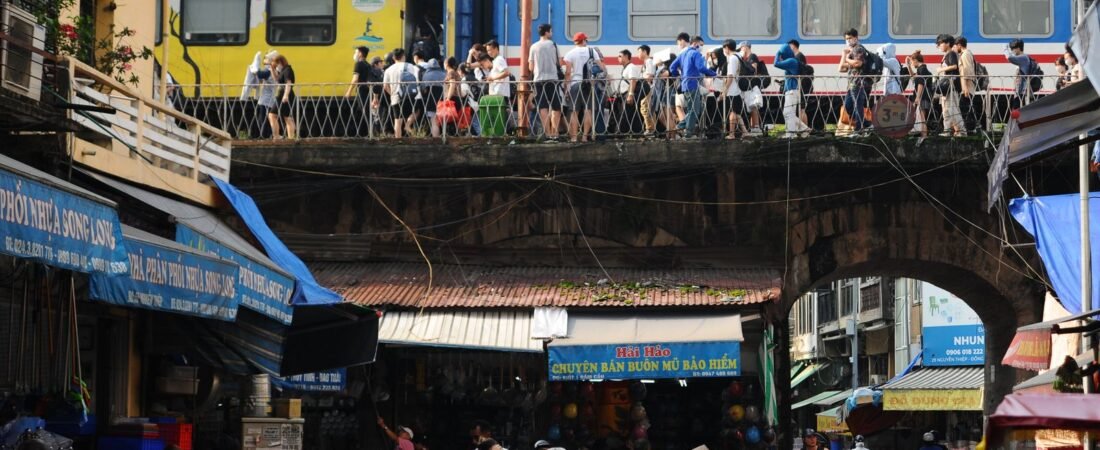
The photograph here shows rail infrastructure in Hanoi. It illustrates the railway’s place in urban life, rather than the coastal scenery of the Hải Vân route. Do not enter tracks or restricted areas to recreate a travel image; use authorised passenger areas and follow staff instructions.
Vietnam by train is most rewarding when the timetable supports a realistic holiday. A considered sequence of journeys and stays can give both landscape and local life a place in the story, without requiring the traveller to cover the whole country at once.
Plan your visit
Photo by Ama Journey.