
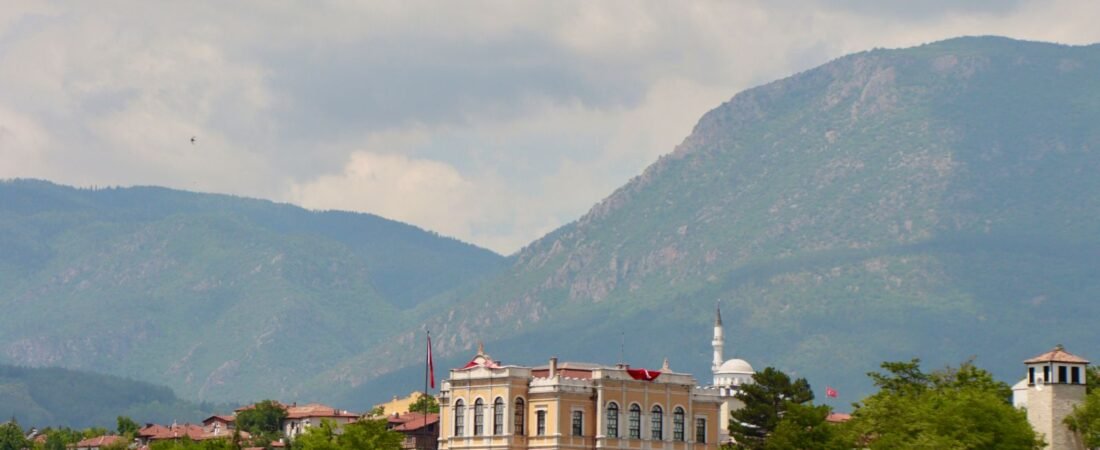
Türkiye’s smaller towns invite a different holiday question: what happens if the accommodation is the starting point for a neighbourhood, rather than a base for a beach? A stay centred on streets, workshops and local meals can make the journey feel less like a sequence of excursions and more like time spent in a place.
Safranbolu offers a clear example. UNESCO describes its importance as a caravan station and its surviving Ottoman urban character. The appeal is not simply a collection of handsome houses. Streets, commercial buildings and residential areas form a town whose layout helps explain how trade and domestic life once fitted together.
Give the town more than a stopover
An overnight stay creates space around the busiest sightseeing hours. It also makes it easier to divide walking into shorter outings, a useful consideration where slopes and historic paving affect access. Before booking a character property, ask about steps, heating, bathrooms and vehicle access. An atmospheric building does not automatically meet every visitor’s needs.
The official Karabük guide points towards Safranbolu’s traditional houses, the Cinci Han and the Yemeniciler Arastası. Use such landmarks as anchors rather than an obligation to see everything. A workshop visit is most rewarding when there is time to understand the material, the process and the price of the work.
Choose depth over a long circuit
Beypazarı, included in GoTürkiye’s Ankara routes, provides another possible focus for travellers interested in smaller settlements. It need not be added to the same trip. Choosing one town and its surroundings can be more satisfying than spending each morning repacking for the next historic centre.
Meals are part of that slower approach. Seek out independently run places, ask which dishes are prepared locally and avoid assuming that every business has the same opening pattern throughout the year. Travelling outside the busiest holiday periods can change the experience, but visitors should confirm transport, accommodation and restaurant availability in advance.
The broader opportunity is to make heritage economically useful without reducing a town to a visitor set. Spending on skilled work, using a local guide and staying long enough to eat more than one meal can spread the value of a visit. Respect for private homes, religious spaces and residents’ routines matters just as much.
A small-town holiday is strongest when it has room to be ordinary. The memorable moment may be a conversation over a purchase or the walk back to the guesthouse, rather than a view arranged for a photograph.
Plan your visit
Photo by İremnur ÖZTÜRK.