
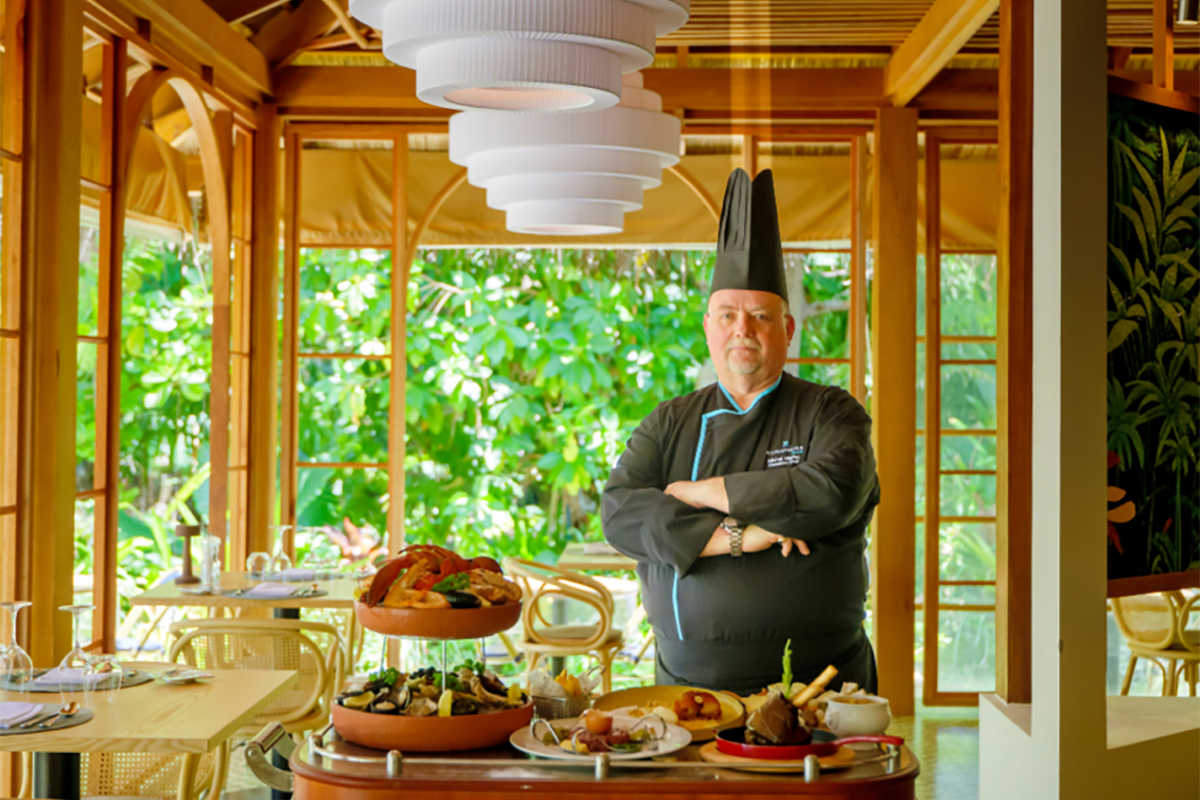
Executive chef Michel Muffat’s experience at Kuramathi shows how island hospitality depends on trained teams, food safety, careful sourcing and reliable logistics as much as culinary creativity.
A resort restaurant is the visible end of a much larger operation. For executive chef Michel Muffat at Kuramathi in the Maldives, the work behind a meal includes staff development, kitchen systems, food safety and the reliable movement of ingredients to an island location. His account makes that operational world central to understanding luxury hospitality.
An International Career Finds an Island Challenge
Muffat trained at hotel school in Thonon-les-Bains, France, before working elsewhere in Europe and later in Korea and Thailand. The disruption caused by SARS in Southeast Asia in 2003 helped bring him to Kuramathi, where he saw an opportunity to apply the experience accumulated over the previous two decades.
What kept him there was a continuing programme of improvement. He describes work on hygiene standards, culinary training, kitchen renovation and the individual identities of the resort’s restaurants. Management support allowed those changes to develop over time.
Delegation Makes Consistency Possible
Overseeing twelve restaurants requires more than personal control. Muffat relies on chefs de cuisine whom he has trained to maintain quality, oversee hygiene and develop junior colleagues. Nine à la carte restaurants provide distinct concepts, alongside three buffet restaurants.
This structure connects culinary variety with shared operational standards. Individual venues can express different identities while their teams work within a consistent approach to preparation, training and food safety. Menu changes are selective rather than wholesale, taking account of dish popularity and emerging preferences.
The Geography Behind the Plate
Muffat identifies supply-chain logistics and timely deliveries as persistent challenges. Maintaining HACCP food-safety standards in a tropical environment adds another layer, while recruiting skilled staff remains difficult. He also notes how international conflict can disrupt supply routes and raise fuel costs, placing pressure on food budgets.
Local production is prioritised where possible, making sustainability and self-sufficiency operational concerns rather than decorative language. His perspective links the guest experience with the wider conditions that support it. For island tourism, dependable service begins well before a diner opens the menu: in procurement, training, maintenance and the daily coordination of a capable team.
Source: DipTalk. Adapted from the original interview published by Mosaic Digest. Image from the original Mosaic Digest feature.