
Japan’s best-known cities can fill an entire holiday, yet a regional journey offers a different kind of attention. Kanazawa, Takayama and Shirakawa-go make a useful starting point for travellers interested in markets, traditional streets and the relationship between a settlement and its landscape. The aim should be a coherent route, rather than a race to add three more names to a list.
Japan’s national tourism organisation presents these destinations together as a regional travel idea. That is a helpful framework, but it does not remove the need to plan connections. Railway journeys, road transfers and local sightseeing operate on different rhythms. Check each leg before committing to accommodation, particularly when a bus connection is essential.
Make Kanazawa a place to stay
Kanazawa gives the journey an urban centre, with food and craft providing ways into the city. The official guide highlights Ōmichō Market among its attractions. Approach a market as a working shopping environment: eat where food service is offered, avoid blocking stalls and ask before taking close photographs of people or products.
Allow time to explore beyond a single landmark. A workshop visit, a museum or an unhurried lunch can give a day a shape without requiring constant movement. For craft purchases, ask about the maker and any care or shipping requirements before buying a fragile object.
Change pace in the mountain settlements
Takayama and Shirakawa-go bring another scale to the trip. Traditional streets and distinctive domestic architecture are reasons to slow down and look closely. They are also lived environments, where a visitor’s freedom to wander stops at a private doorway or a restricted path.
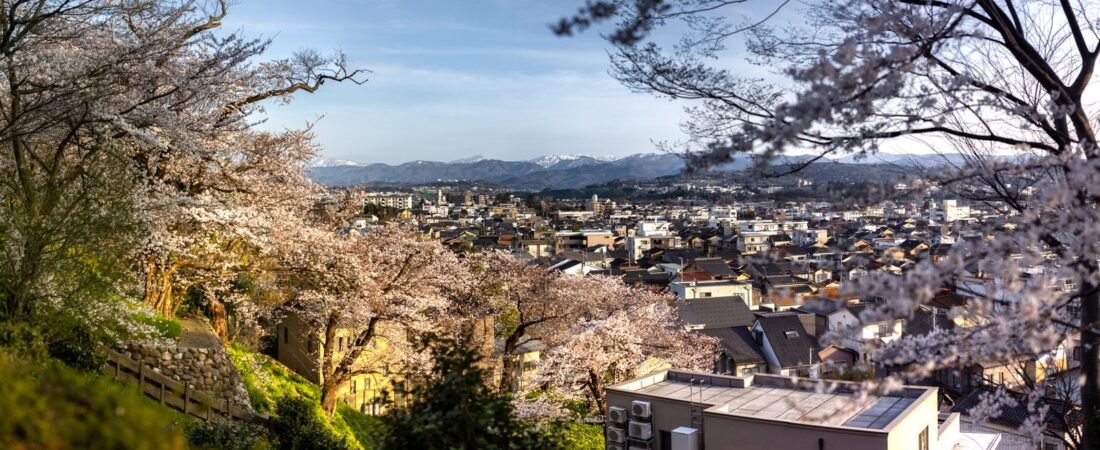
Season makes a substantial difference to planning. The cherry blossom in the accompanying Kanazawa photograph represents one moment of spring, rather than a year-round appearance. Winter travel needs its own assessment of clothing, road conditions and transfer margins. Check current local guidance instead of building a booking around the atmosphere of a photograph.
Leave room between the highlights
Stay fewer places for longer if the available time is short. A regional itinerary becomes less rewarding when every arrival is followed immediately by luggage storage, a hurried walk and the next departure. Two substantial bases may work better than a different hotel every night.
The reward is a more varied understanding of Japan: a city market, a craft tradition and a mountain settlement connected through an actual journey. The famous destinations need not disappear from the itinerary. They simply cease to be the only places through which the country is understood.
Plan your visit
- Japan National Tourism Organization: Takayama, Shirakawa-go and Kanazawa
- Japan National Tourism Organization: Tokai
Photo by Marek Piwnicki.