
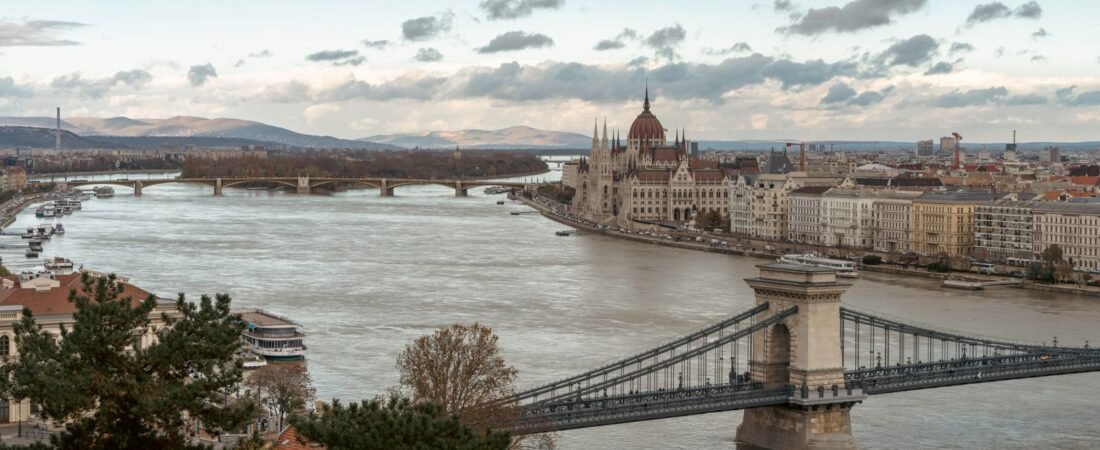
The Danube gives a European itinerary a visible thread. Vienna, Bratislava and Budapest can be approached as three distinct cities connected by a river, rather than as interchangeable stops on a short break. The river provides orientation; the journey becomes richer when each city is allowed to keep its own history and rhythm.
Begin by choosing the time available for actual stays. Three cities are not automatically better than two. A trip with several full days in each place can support museums, neighbourhood walking and an unhurried meal, while a hurried circuit may be dominated by luggage and station transfers.
Follow the river without forcing the transport
Travelling along a river does not require every transfer to be made by boat. Choose transport according to current services, the season and the needs of the group. Check actual departure points and journey times before paying for accommodation around a connection. A summer excursion listing should never be assumed to operate throughout the year.
The Danube Competence Centre offers a regional starting point, while Danube Austria’s cycle-route information helps explain another way of following part of the river. Its route material includes the connection towards Vienna and Bratislava. A cycling plan requires separate consideration of distances, luggage, surface conditions and the rider’s ability.
Give each city a separate question
In Vienna, the itinerary might focus on the relationship between the historic centre and a contemporary neighbourhood. In Bratislava, a more compact stay can leave room to examine how the city meets the river. In Budapest, walking by the water can help orient a visit before exploring further inland. These are planning prompts, not fixed walking routes; use local visitor information to turn them into practical days.
Avoid choosing only the sights visible from the riverbank. A market, a museum or an independent bookshop can add another perspective, while locally run cafés and restaurants give opportunities to spend outside a packaged excursion.
Leave space for an ordinary evening
One of the pleasures of staying is the freedom to stop sightseeing. Choose a meal near the accommodation, revisit a place enjoyed earlier or simply allow time to rest. A journey gains coherence through repeated attention, not only through the number of landmarks collected.
The Danube route works best as a cultural frame rather than a rigid product. It links places without making them the same. With realistic transfers and enough time ashore, the river becomes a way to see connections while still noticing the differences that make each city worth visiting.
Plan your visit
Photograph: Budapest and the Danube, with the Hungarian Parliament beside the river. Photo by Raul Ling on Pexels.