
Bhutan asks visitors to think about the cost of a holiday before they arrive. Its Sustainable Development Fee places a visible public charge alongside accommodation, transport and activities. For travellers, that creates an opportunity to consider a wider question: what should tourism contribute to the country receiving it?
The official tourism explanation connects the fee with Bhutan’s development priorities, including public services, infrastructure and environmental protection. It is important to understand the mechanism accurately. The payment supports the public purse; it should not be described as a personal donation ring-fenced for a particular village, monastery or conservation project.
Read the rules before budgeting
Rates, exemptions and visa arrangements depend on the traveller’s circumstances and can change. Use Bhutan Tourism’s current FAQ when planning, rather than a price copied from an old itinerary. Obtain a written breakdown of what a quoted holiday includes, separating the public fee from rooms, guiding, transport, meals and any other charges.
That clarity makes comparison possible. A low headline quote may leave out essential costs, while an expensive itinerary does not automatically deliver stronger community benefits. Ask practical questions about the businesses providing the services and how the journey is organised.
Responsibility continues after payment
A fee cannot replace considerate behaviour. Respect access restrictions at religious sites, follow local guidance on clothing and photography, and treat residents as people with their own daily routines. Permission to visit a place is not permission to photograph everyone within it.
Choose activities that suit personal fitness and the conditions on the day. A famous viewpoint is not an obligation, and an itinerary should leave room for rest. Discuss walking demands, altitude and transport time with the provider before booking rather than relying on the reassuring tone of a brochure.
Ask where the ordinary spending goes
Accommodation, meals, handicrafts and guiding are additional points at which tourism can support livelihoods. Ask who made a product and whether a business is locally run. Buy selectively and pay agreed prices fairly. The aim is a useful exchange, not an encounter staged to prove the visitor’s generosity.
Bhutan’s approach offers a framework for a more deliberate holiday, but visitors should resist treating any destination as a perfect model. The meaningful test is how policy, business practice and personal behaviour work together. Planning with that distinction in mind makes the journey more informed and the idea of responsible travel more concrete.
Plan your visit
- Bhutan Tourism: official frequently asked questions
- Bhutan Tourism: understanding the Sustainable Development Fee
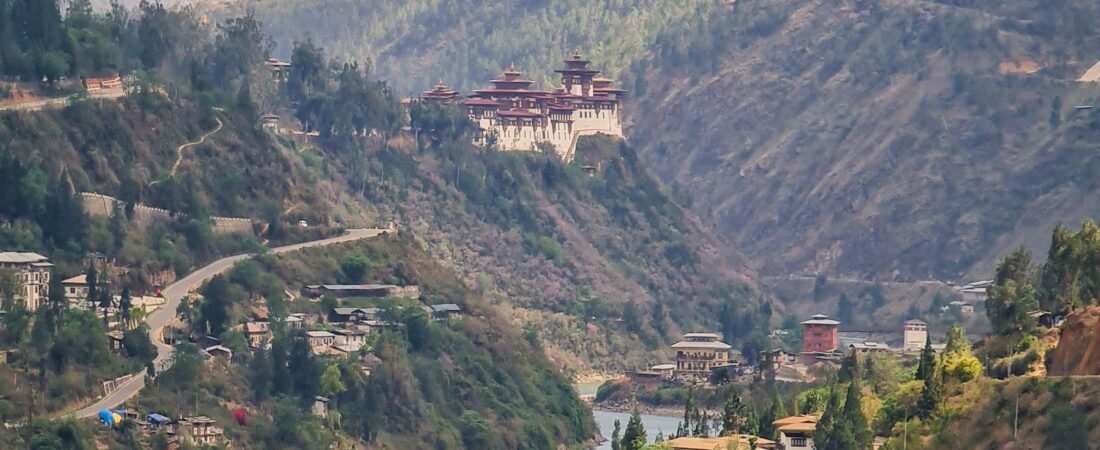
Photograph: The river valley and Wangdue Phodrang Dzong in Bhutan. Photo by Phuntsho Wangdi on Pexels.