
A market visit changes the questions a traveller asks of a city. Alongside where to go and what to photograph come smaller enquiries: what is in season, how a dish is served, who buys a particular fabric. In Seoul, a traditional market can give a city break a human scale, provided it is approached as a workplace as well as an attraction.
Gwangjang Market is one possible starting point. Seoul’s municipal guide traces its establishment to 1905 and describes both its food and textile trade. The combination is useful for visitors: it encourages looking beyond the most photographed plate to the different businesses sharing the same market environment.
Let curiosity set the pace
The city guide highlights foods including mung-bean pancakes and gimbap. Try a modest order first, particularly when eating across several stalls. Confirm prices and portion sizes, ask about ingredients and make dietary requirements explicit. A familiar-looking dish can contain an unexpected stock, sauce or garnish.
Ordering does not purchase unlimited access to the person preparing the food. Ask before making a close portrait or filming a cooking process. Stand where customers can still reach a stall, and do not hold a seat after eating when other people are waiting.
Look beyond the food aisle
The textile side of a market offers a different set of conversations about materials, colours and use. Visitors who are interested in buying should ask what a product is made from and whether alterations, delivery or additional costs are involved. Browsing respectfully also means accepting that some traders are busy and may not have time for a long explanation.
Build the rest of the day around one area rather than crossing the city repeatedly between markets. A café, a walk or a museum can provide a useful change of pace after a crowded shopping environment. Keep the plan flexible enough to leave if the space becomes uncomfortable.
Practical details matter
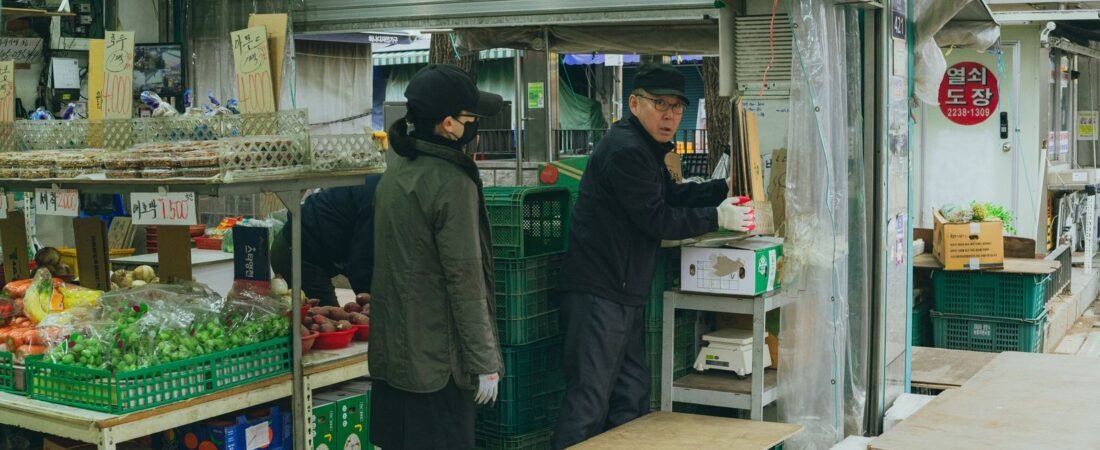
Check current opening arrangements for the particular section you want to visit; a market does not necessarily keep one uniform timetable. Carry a payment option accepted by the seller, keep valuables secure and establish a meeting point if travelling with others. The accompanying photograph shows a Seoul market scene, not a verified view of Gwangjang itself.
This is a way of travelling that rewards questions without demanding spectacle. A market can introduce visitors to the daily exchange that keeps a city functioning. The best experience leaves room for that exchange to continue around them.
Plan your visit
Photo by Theodore Nguyen.